The Multiple Faces of ADHD

When I run my ADHD group, I start off with an orientation that includes sharing how complex ADHD really is.  And one of the things that surprises most group members is hearing that ADHD is actually seen as multiple conditions.

And I’m talking about something bigger than whether one’s diagnosed as having a “presentation” of ADHD as primarily inattentive, primarily hyperactive or a mix of both.    grid-2111788_1920

As Joel Nigg at OHSU puts it, ADHD appears to be an “umbrella diagnosis,” such as cancer once was (see here).

Cancer was thought to be a single disease, and we now know there are various types of cancer.

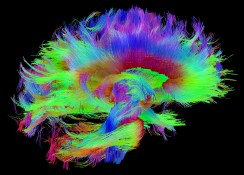
Researchers are currently trying to identify the various conditions found under the umbrella of “ADHD.”  Each may have different genes, environmental causes, and clinical outcomes.  They likely have different brain signatures (see Understanding ADHD for more on brain differences).

And they may have different optimal interventions.

This complicates research findings that include participants only because they share a diagnosis of ADHD.  It might be like trying to understand cancer by averaging results across participants with skin cancer and liver cancer.  Or perhaps it’s more analogous to averaging results across participants with different forms of skin cancer.  It’s unclear.

Once the fog clears, I’m excited to know what we’ll learn about the different conditions all now diagnosed as simply ADHD (with three “presentations”).


What predicts ADHD symptom reduction over time?

In school-age children with ADHD, “visual spatial working memory maintenance” improvement predicts symptom improvement.  See the Oregon Health and Science University (OHSU) study here.

aircraft-513641_1920

Let’s unpack this.

“Visual spatial working memory maintenance” is about maintaining mental representations of the arrangement of what you’ve just seen as the next sights show up.

It’s what you have to do when you drive.  You have to remember the positions of other cars and cyclists as you also attend to traffic lights and road signs.  Imagine you come to a light where you want to turn right.  To do this without an accident, you need to maintain the representation of the cyclist who was riding on your right side seconds before.

Air traffic controllers and pilots require especially good visual spatial working memory maintenance (for a brief, clear description of visual working memory from the University of Michigan, go here).

Now, hold on to this idea as we look at the OHSU study.

What the OHSU researchers found is that the children of their study who showed some ADHD symptom “recovery” or “remission” were the ones whose visual working memory maintenance improved as they developed.

It raises interesting questions, including whether to focus attention on developing this cognitive ability to reduce ADHD symptoms and whether a third factor contributes to both visual working memory maintenance improvement and ADHD symptom reduction.  Of note, the researchers examined how two other cognitive processes changed over time.  These processes were response inhibition (self-restraint, essentially) and delayed reward discounting (depreciating the value of a non-immediate reward).  Their changes were unrelated to symptom reduction.


How to Make ADHD worse

When you have ADHD, here’s your recipe for disaster:  Mix sleep deprivation with carnival food.  Deep fry.

Hold the physical exercise and Omega-3s.

No one says, “I want to be my worse self.”  Yet many of us are doing exactly what we need to get us there or keep us there.

When you have ADHD, sleep deprivation makes your symptoms worse, carnival-like food makes your symptoms (particularly forgetfulness) worse and lack of physical exercise and Omega-3s keeps them from getting better.

If you want to give yourself the best chance at optimal brain functioning, here’s the winning combination:  sleep enough, eat healthy food (including Omega-3s), and exercise regularly.  This is true for all us but is essential when you have ADHD.

Consider that chronic sleep deprivation looks like ADHD.  Imagine what happens when you combine them.  Check out recent research on ADHD and circadian rhythms here.

Omega-3s matter so much, there’s even an Omega-3 prescription for ADHD called Vayarin.  See specifics on the Omega-3 and ADHD connection here:  Something Fishy.

For a recent review and meta-analysis on use of Omega-3s for ADHD, go here.

As for exercise, namely cardio exercise, check out this recent review.

Try the winning combination for even just one week and see what you notice.  I bet your brain will thank you.

Book Review

TransformingADHD-MECH.inddI found two reviews of the book I co-authored. The first one is below, which I posted before. It’s so interesting to find reviews instead of having reviewers let you know of them. Never would have known except for a search for something related to ADHD that led to this review awhile back and the other a few weeks ago.

Book Review:

Transforming ADHD

ADHD is not as it sounds — an attention deficit disorder.

According to the authors of Transforming ADHD: Simple, Effective Attention & Action Regulation Skills To Help You Focus & Succeed, Greg Crosby, MA, LPC, and Tonya K. Lippert, PhD, ADHD is a difficulty regulating and adjusting attention to fit the situation you are in.

Guided by the interdisciplinary approach known as interpersonal neurobiology, Crosby and Lippert show that ADHD is about much more than simply learning to pay attention. It is about successfully navigating and recognizing the external and internal environments that influence attention.

“The biggest confusion about ADHD seems to stem from its reference to a ‘deficit.’ As ADHD scholar Hallowell and Ratey (2005) said to refer to an attention deficit when speaking of the experience of ADHD ‘completely misses the point’,” write Crosby and Lippert.

According to the authors, attention is biased — that is, it moves toward some things and away from others. For those with ADHD, it’s not that attention itself but the flexibility or control of attention that is lacking. The result of this low attention regulation, is not just over-focusing and under-focusing; it also effects how we sustain effort and manage emotions.

One biochemical reason people with ADHD may have difficulty paying attention to what is not exciting is because they have lower levels of dopamine. Low dopamine function in turn leads to behaviors that seek to compensate for dopamine deficiency.

Crosby and Lippert offer helpful tips for those with ADHD to learn to place their attention where they want. Learning what they call the four S’s of attention – starting, sustaining, stopping, and shifting – can be helpful. Next, by paying attention to what activities attract and detract attention, and pairing activities of low interest with those of high interest, those with ADHD can practice sustaining attention when it might otherwise wander.

A person’s environment can also have a significant impact on his or her ability to pay attention, according to the authors. They write that part of becoming successful with ADHD involves designing your environment for optimal attention and action regulation.

“When it comes to long-term goals, (designing your exterior environment to work with your interior environment) means introducing representations of your desired future into your present by, for example, taping pictures of your desired home on your computer screen if your impulsive purchases occur online,” write Crosby and Lippert.

They also offer some other examples of environmental design such as closing yourself into a room where you are less accessible to the dog, wearing headphones, working away from home or taping an assignment list to the side of your computer monitor.

Another practice, which Crosby and Lippert call Introduce Results of Tomorrow Today (IRTT) helps those with ADHD overcome urges that draw attention away from the long term results they want.

Crosby and Lippert tell the story of Zelda, who had tried and failed to quit cigarettes many times. It wasn’t until she made a pact with a close friend that if she smoked she’d have to give $5000 to the KKK that Zelda was able to quite for good. This practice is a powerful way to maintain personal accountability, and also to learn that with a little effort, it is possible to design an environment that improves attention and action regulation.

Those with ADHD can also adopt healthy behavior to change not just attention and action regulation, but the gene expression related to them – which is called epigenetics. Crosby and Lippert cite one study where exercise was shown to affect the gene expression within cells throughout the body – brain, heart, bone, muscle, mouth and fat – including directly altering fat formation. One helpful brain exercise the authors recommend: Replace multi-tasking with mindful-tasking.

Understanding relationships and the neurobiology between them is also important in managing ADHD. One important reason, the authors write, is that people with ADHD have higher rates of insecure attachment as children, which predisposes them to poor self-regulation.

While we can’t rewrite our childhoods, what we can do is better understand our attachment patterns (for which the authors offer a helpful quiz) and then shift to security through reflecting on our childhood and practicing mindfulness.

Learning to communicate more effectively is also fundamental for people with ADHD. The authors suggest practicing mindful listening, paraphrasing, and what they call “urge surfing” or learning to notice — but not respond to — urges within a conversation.

“When you surf an urge, including the urge to interrupt, you notice the urge without acting on it. It’s an action regulation skill — a way to stop an action,” they write.

Packed with useful and effective exercises, Transforming ADHD offers a fresh and insightful look at ADHD – and one that might just change your life.

Understanding ADHD

Per Russell Barkley (RB), ADHD guru (i.e., scholar and scientist):

ADHD is a disorder of self-regulation that can also be described as a “disorder of age-inappropriate behavior” that looks like inattention and lack of inhibition.

Though I want to clarify that the inattention depends on what you are doing; another guru of ADHD, Thomas Brown, says the “central mystery” of ADHD is that those with it can pay attention to some things and seem incapable of paying attention to other things.white-matter-fibers-hcp-dataset-red-corpus-callosum

But back to RB and ADHD as a disorder of self-regulation.

RB defines self-regulation as “self-directed action intended to alter subsequent behavior so as to change the probability of a future event or consequence” (to improve your longer-term welfare).

For example, say you have a problem with money and keep getting into debt by living off credit.  You want to pay off your debt (self-directed action) to be able to cancel your credit card and limit spending (subsequent behavior) to reduce the chance you’ll get into debt again (change the probability of a future event).

Where does ADHD fit? With ADHD one has the intention to alter behavior (e.g, limit spending) to change the future (e.g., live debt-free) but struggles with the self-directed action (e.g., paying off debt) required for this.

Barkley says it’s a disorder where knowledge fails to guide performance.  You know what to do but struggle to do it.

WHY?

RB highlights that ADHD brains show prefrontal cortical network differences (these networks are responsible for Executive Functioning and self-regulation is the core of Executive Functioning).  Here is where the differences exist and what comes into play:

  • Frontal-striatal circuit, the “what” network (what we think influences what we do) Here lives…
    • Freedom from distraction
    • Working memory
    • Organization and planning
  • Frontal-cerebellar circuit, the “when” network (timing of thought, behavior)
    • With ADHD, there’s “time blindness,” and
    • A “myopia to the future”
  • Frontal-limbic circuit, the “why” network.  Here lives…
    • The decision-maker of the brain (if you have multiple goals, which do you pursue? this circuit, as RB puts it, “makes the final call”)
    • Motivation
    • Emotional control or dyscontrol

These network differences show up as self-regulation differences that encompass

Self-directed action, Self-awareness, Self-motivation, Self-directed attention, Self-restraint, Self-directed sensing, Self-directed emotions, and Self-directed play.

WHAT TO DO?

Outsource these brain functions.

RB calls this externalizing the brain functions where there are deficits.  For example, he says, use “artificial prosthetic cues to substitute for working memory deficits.”

Ideally, this is what ADHD coaches will help you do (for more on this, see Does ADHD Coaching Work?)

Here are some pointers for externalization:

  1. Per RB, the externalization of brain functions is needed at the point of performance and within your natural setting (e.g., if you struggle to write a report at work, you need external factors to guide your attention at work at the time you need to write); and
  2. To externalize, change your environment (think planners, alarms, points, signs).

Replenish your self-regulation (think self-control) resource pool.  It’s depleted by simple use as well as stress, drug abuse, illness.  Replenish through

  • Rewards, positive emotions
  • Positive self-talk
  • 10 minute breaks between tasks requiring self-control
  • 3 minutes of relaxation or meditation
  • Glucose ingestion (Gatorade, lemonade, sugar water) while working on tasks requiring self-control
  • Daily physical exercise

Also, break lengthy or complicated tasks down.  One of my favorite reminders of this, though I really like elephants, is, “How do you eat an elephant?”

Answer:  one bite at a time.

RB adds that accommodations or scaffolding and the compassion and willingness of others to make accommodations are “vital” to your self-regulation effectiveness.

Sources:  Two talks by Russell Barkley on ADHD, one from 2013 entitled, “The Importance of Emotion in Understanding and Managing ADHD (here) and one from 2012 entitled, “ADHD, Self-Regulation, and Executive Functioning:  Theory and Implications for Management” (the part of it I used is here).

Does ADHD Coaching Work?

There are three things to know about coaching.

First, if you read Russell Barkley, scholar and researcher on ADHD, the idea of coaching makes sense.  Barkley argues that what you need with ADHD is something external to guide your behavior right at the moment that the behavior’s needed.

Imagine you need to study for a job interview you have the next day and you are about to surf online. Right at that moment, with your fingers poised to tap the keyboard, you need something external to stop you (or to guide you toward stopping). This something will then need to remind you of your interview and reinforce studying over surfing. This is ideally what a coach does…guides your behavior at the moment it most matters, which is when you play the game…of job-seeking or whatever it is.

A coach guides your action as it is happening.

baseball-1536097_1920Second thing to know is that the reality of ADHD coaching appears to approximate this at best.

You can get a coach working with you multiple times a week and the work can center around where you most struggle. But, at best, it’s like having a coach available by phone some of the times you play the game. It’s just unrealistic to have the ideal kind of coaching…unless you’re wealthy and want to pay someone to be with you, guiding your behavior at various points of the day, as needed. Perhaps one day, we’ll have AI do this for us, should we choose…hmm.

The third thing to know is that the research on what makes for an effective ADHD coach is sorely lacking. Only a few exploratory studies, primarily focused on college students, seem to look at this, with recommendations for larger-scale, more rigorous research. So while you can find folks credentialed to be an ADHD coach, there’s no real research showing coaching clearly works and under what circumstances.

This leaves us all figuring out for ourselves, if we pursue coaching, whether it’s working. Actually, even if research clearly said it’s likely to be effective for most, we’d still have to figure out its effectiveness for us.

Fidgeting: Spin vs. Science

My local Memorial weekend festival had fidget spinners for sale, ranging from $12 to over $20, advertised to help with ADHD, anxiety and more.  It left me wondering what we know about their effectiveness.  It turns out very little.  On my go-to research source, pubmed, I could find no single study on fidget spinners or their kin (cubes, etc.).  But NPR published two articles exactly two years apart, one on fidget spinners and one on fidgeting.  ball-1023984_1920

On May 14, 2017, NPR published an article on fidget spinners.

Essentially, the article quotes a Duke professor suggesting to stick with what’s known to work.

The professor points out that there’s no evidence that fidget spinners work.  Though it’s said, what seems perhaps buried or likely to be easily overlooked is that the reason there’s no evidence is that there’s actually no trustworthy research on them.  See here.

Meanwhile, two years earlier, on May 14, 2015, NPR published an article describing a small study that shows that children with ADHD performed better on tasks requiring concentration when they fidgeted.  (The children worked while on a swivel chair that they, of course, spun and moved.)

Overall, more movement meant better performance for these kids (kids without ADHD, on the other hand, did worse with movement).  The lead author, however, cautioned against both too little and too much movement.  See here.

Perhaps fidget spinners would fall into too much movement or the wrong kind (attracting eyes as well as fingers), but it’d be interesting to see some real research on them.

Medication Metaphor: Tunnels

Imagine yourself inside a room full of tunnels.

You can look down any of them.  Maybe you like this sense of freedom.  Maybe you also find it distracting.led-lighting-1846929_1920

But now you have your ADHD medication.

Walls go up over all the tunnels except the one you’re facing.

When you turn your head, the wall for the last tunnel you faced slides up.  The wall for the tunnel you now face slides down.

You can switch which tunnel you look down, but you can see only one tunnel at a time.

You can also see the tunnels with obstacles.

On medication, you find it’s easier to enter these previously-avoided tunnels (maybe because the more appealing tunnels have their walls up, keeping their temptations out of sight).

And once you enter one of these “harder” tunnels, the medication helps you stay there.

This is part of the experience of ADHD medication for many of those with ADHD, on the one that’s working for them.

Something Fishy

ADHD often comes with omega-3 and omega-6 fatty acid deficiencies.

But upping your omega-3 and omega-6 fatty acids may have little effect on your ADHD symptoms. What gives? Recent research reveals that it’s all about the ratio.

ADHD can mean low levels of both but, overall, higher levels of omega-6 to omega-3.

Now you may say, well, I just need to increase my omega-3 levels then, right? I wish it were so simple. Researchers have tried this with only some succesfish-2207845_1920s. A supplement heavier on the omega-3 than omega-6 side may be better, as indicated by a study that found benefit from giving participants an omega-3/6 supplement containing mostly EPA and DHA (omega-3), with only 60mg of LA (omega-6).

If it’s possible, it seems you’re best off knowing your ratio. And then knowing how much omega-3 (EPA/DHA) and omega-6 (LA or AA) you need to optimize it.

See here.

It’s nothing personal.

This is for the loved ones of those with ADHD.

Yesterday, I sat with my husband and tried to just talk.  We are so busy doing things, we hardly ever just talk.  Ten minutes into it, I could tell his mind was elsewhere.  I let him know it looked like he was somewhere else mentally.  He said he was.  I asked what was going on, and he said he was “bored.”  “Ouch,” I said.

Then I remembered something.  It’s nothing personal.  I know hong-kong-1990268_1920what I tried to share with him would be quite fascinating to another psychology-lover.  But my husband has ADHD and becomes easily bored with things less exciting than a book such as The Martian.

He also prefers action to talk.  It’s hard to keep his attention.

As Thom Hartmann, author of The Edison Gene, points out those with ADHD constantly monitor the environment for what’s of high stimulation, with a swift ability to turn to these things.  If this high stimulation or need to act is lacking, they may shut down on you.  Kind of like your computer going into sleep mode.  When this happens, breathe and begin breakdancing (attention-getter!) or relax and remind yourself it’s nothing personal.  Really.

Their brains may be tuned to a different frequency.


Blog at WordPress.com.

Up ↑